
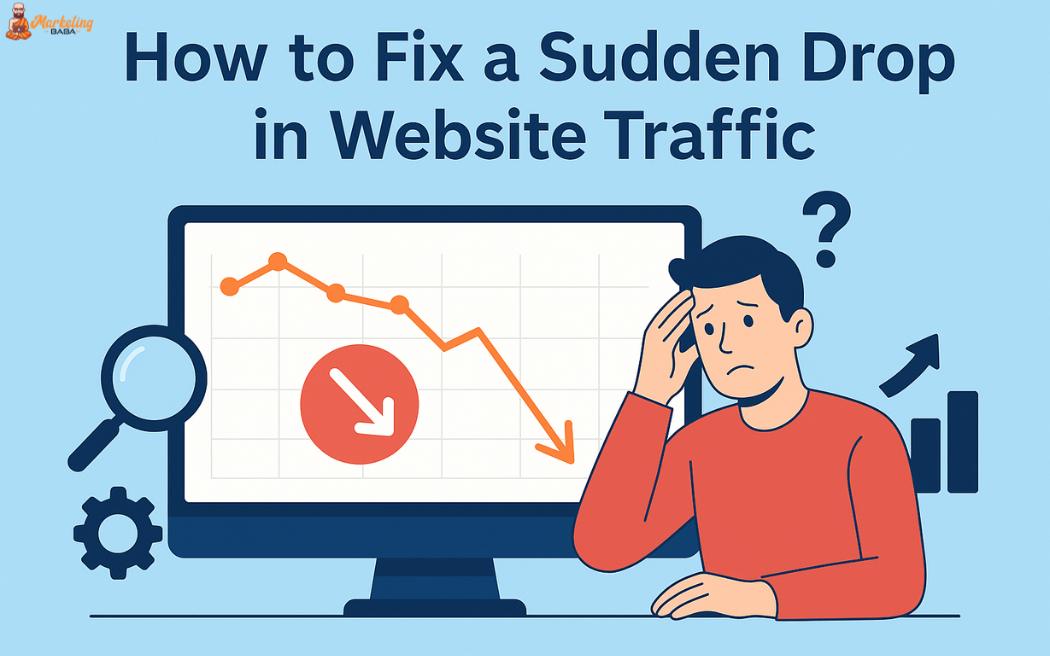
A sudden drop in website traffic can be alarming for any business. Whether you rely on organic search, paid campaigns, or social media, a sharp decline in visitors directly affects leads and sales. The good news is that most traffic drops have identifiable causes, and with the right steps, they can be fixed.
At Marketing Baba, we help businesses diagnose and resolve traffic issues using proven Digital marketing strategies. Here is a step-by-step guide to understanding and fixing a sudden drop in website traffic.
1. Check for Technical Issues
Sometimes, traffic loss is caused by technical errors rather than marketing problems.
- Ensure your website is live and accessible.
- Test page loading speed using Google PageSpeed Insights.
- Verify mobile responsiveness and usability.
- Look for broken links, server errors, or incorrect redirects.
2. Review Google Analytics and Search Console
Your analytics tools can reveal the source of the problem.
- Identify which channel (organic, direct, referral, paid) experienced the biggest drop.
- Use Google Search Console to check for indexing issues or crawl errors.
- Compare data week-over-week or month-over-month to spot trends.
3. Check for Google Algorithm Updates
Google frequently updates its algorithms, and these changes can affect rankings.
- Research recent algorithm updates to see if your website was impacted.
- Analyze whether the drop is keyword-specific or site-wide.
- If impacted, adjust your content to align with the latest SEO practices.
4. Evaluate Content Quality and Relevance
Low-quality or outdated content can lose rankings over time.
- Update old blogs and landing pages with fresh content and keywords.
- Remove duplicate or thin content.
- Ensure your content matches search intent and provides real value.
5. Analyze Backlinks and Domain Authority
Backlinks play a critical role in SEO performance. Losing high-quality links can affect your rankings.
- Use tools like Ahrefs or Moz to review your backlink profile.
- Identify and replace lost links with new outreach campaigns.
- Disavow toxic or spammy links that may harm your domain authority.
6. Review Competitor Activity
Sometimes traffic drops because competitors improve their SEO or paid campaigns.
- Track competitors’ keyword rankings and content updates.
- Identify new strategies they are using.
- Adjust your own SEO and content strategy to stay competitive.
7. Check Paid Campaign Performance
If you run ads, a sudden drop could come from campaign issues.
- Verify budgets, bidding strategies, and targeting settings.
- Review ad performance metrics like CTR and conversions.
- Update creatives to avoid ad fatigue.
8. Inspect Website Security and Penalties
Security issues or penalties can dramatically reduce traffic.
- Ensure your website has an SSL certificate (HTTPS).
- Check Search Console for manual actions or penalties.
- Fix any security vulnerabilities immediately.
9. Reassess User Experience (UX)
Google increasingly prioritizes websites with strong user experience.
- Monitor bounce rate, session duration, and page interactions.
- Improve navigation, design, and calls-to-action.
- Optimize Core Web Vitals for better rankings.
10. Create a Recovery Plan
Once the cause is identified, create an action plan:
- Fix technical issues and re-submit your sitemap.
- Refresh your SEO and content strategy.
- Launch re-engagement campaigns via email or social media.
- Monitor performance weekly to ensure recovery.
A sudden drop in website traffic can feel overwhelming, but with systematic analysis, the issue can usually be identified and resolved. By checking technical health, monitoring analytics, updating content, and strengthening SEO, you can restore and even grow your website traffic.
At Marketing Baba, we specialize in diagnosing traffic drops and creating recovery strategies tailored to your business. If your website has experienced a decline, our team can help you identify the root cause and put you back on the path to growth.
Let’s build your digital success story together. Contact us today at www.marketingbaba.co.in.
Follow Us: