
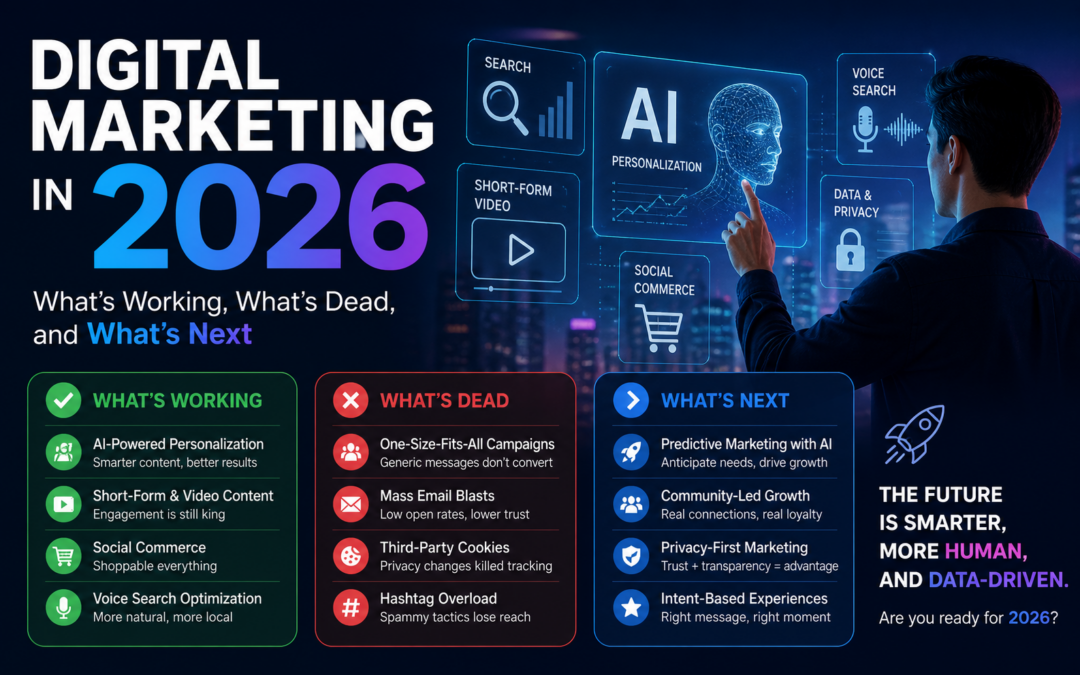
Digital Marketing in 2026: What’s Working, What’s Dead, and What’s Next
Digital marketing is no longer what it used to be. The strategies that once delivered consistent results are quickly becoming outdated, while new technologies and consumer behaviors are redefining the rules of engagement. At Marketing Baba, we believe that staying ahead requires not just awareness, but the ability to adapt and act.
In this blog, we break down what is working in 2026, what has lost its effectiveness, and what the future holds for businesses aiming to grow in a competitive digital landscape.
What’s Working in 2026
AI-Driven Marketing
Artificial Intelligence has become a core component of successful marketing strategies. From customer segmentation to predictive analytics and automated communication, AI allows businesses to deliver highly personalized experiences at scale. Brands that are integrating AI into their workflows are seeing improved efficiency, better targeting, and stronger returns on investment.
Short-Form Video Content
Short-form video continues to dominate user attention across digital platforms. Whether it is educational snippets, product highlights, or storytelling content, videos that are concise and engaging are performing exceptionally well. The focus has shifted from high production to authenticity and consistency.
Personalization and Data-Driven Campaigns
Modern consumers expect brands to understand their needs. Personalized marketing—based on user behavior, preferences, and past interactions—has become essential. Businesses leveraging data effectively are able to create more meaningful connections and significantly improve conversion rates.
Influencer and Creator Partnerships
Influencer marketing has matured into a powerful channel, especially with micro and niche creators. These partnerships often result in higher engagement and stronger trust compared to traditional advertising. Authenticity and relevance now matter more than audience size.
SEO Focused on User Intent
Search engine optimization remains highly relevant, but the approach has evolved. In 2026, success in SEO depends on understanding user intent, delivering valuable content, and ensuring a seamless user experience. Search engines prioritize content that genuinely answers user queries rather than content optimized only for keywords.
What’s No Longer Effective
Keyword Stuffing
Old SEO tactics like keyword stuffing no longer produce results. Search engines have become more sophisticated and now prioritize clarity, relevance, and quality. Content must be written for users first, not algorithms.
Misleading Clickbait
While clickbait headlines may still attract attention, they fail to build long-term trust. Users today expect transparency and value. Content that does not meet expectations leads to high bounce rates and reduced credibility.
Generic Email Campaigns
Mass email marketing without segmentation is increasingly ineffective. Users are more selective about what they engage with, making personalized and targeted communication essential for success.
Neglecting Mobile Optimization
With the majority of users accessing content on mobile devices, having a mobile-optimized website is no longer optional. Poor mobile experiences directly impact engagement, rankings, and conversions.
Focusing Only on Vanity Metrics
Metrics such as likes, shares, and follower counts no longer define success. Businesses are now prioritizing meaningful indicators such as conversion rates, customer retention, and overall return on investment.
What’s Next in Digital Marketing
Voice Search and Conversational Interfaces
The rise of voice-enabled devices is changing how users search for information. Queries are becoming more conversational, and businesses need to optimize their content accordingly to remain visible.
AI-Assisted Content with Human Creativity
AI tools are transforming content creation, but human input remains critical. The most effective content strategies combine AI efficiency with human creativity, ensuring both scale and authenticity.
Interactive and Immersive Content
Interactive formats such as quizzes, polls, and augmented reality experiences are gaining traction. These formats encourage active participation and lead to higher engagement compared to static content.
Privacy-Focused Marketing
With increasing concerns around data privacy, businesses must shift towards ethical data collection practices. First-party data will play a crucial role, and transparency will become a key factor in building customer trust.
Community-Led Growth
Building communities around a brand is emerging as a strong growth strategy. Businesses that invest in creating meaningful connections and fostering engagement will benefit from long-term loyalty and advocacy.
Final Thoughts from Marketing Baba
Digital marketing in 2026 is defined by intelligence, adaptability, and authenticity. Businesses that continue to rely on outdated tactics will struggle, while those that embrace innovation and focus on delivering real value will thrive.
At Marketing Baba, we encourage brands to stay informed, experiment with new strategies, and prioritize building genuine relationships with their audience. The future of digital marketing belongs to those who are willing to evolve.