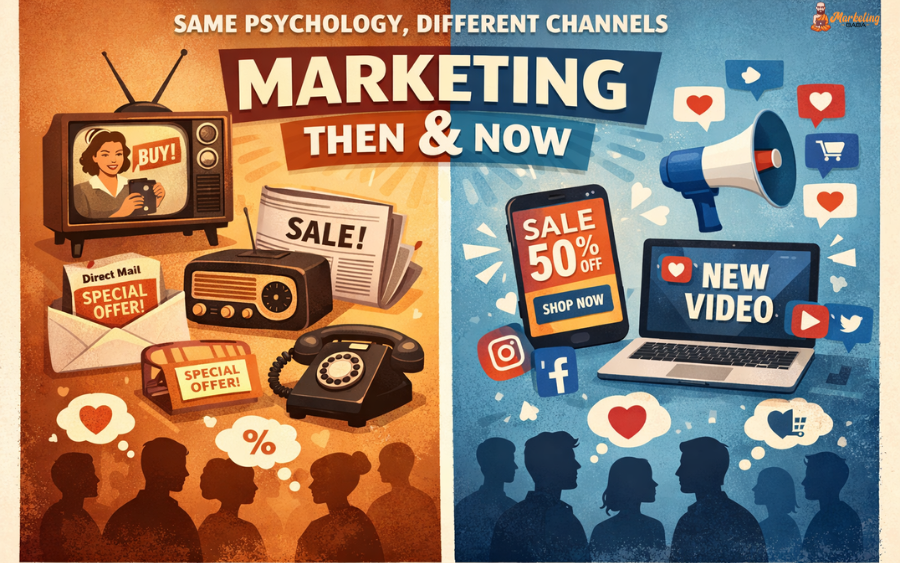
Marketing has evolved rapidly—but human psychology has remained constant.
From newspaper ads and billboards to social media reels and AI-driven campaigns, the platforms have changed, but the reasons people buy are still rooted in emotion, trust, desire, and social influence.
Marketing Then: Simple Channels, Strong Psychology
Earlier, marketing relied on traditional channels like newspapers, radio, TV, hoardings, brochures, and word of mouth. Brands had limited reach, but they focused deeply on human connection.
Marketers used powerful psychological triggers such as trust, authority, emotion, and scarcity. Familiar local brands, celebrity endorsements, emotional storytelling, and limited-time offers played a key role in influencing decisions.
Marketing Now: Digital Channels, Smarter Targeting
Today, marketing happens across websites, search engines, social media, email, WhatsApp, influencers, and automated ad platforms. Brands can now target specific audiences with personalized messages at the right moment.
Even now, the same psychological drivers dominate—social proof through reviews and likes, FOMO through flash sales, aspiration through lifestyle content, and convenience through instant access and quick responses.
What Has Really Changed
The biggest shift is not psychology, but execution. Marketing has moved from one-way communication to interactive conversations. Customers now engage, respond, review, and influence brand perception in real time.
Technology has added speed, scale, and data—but emotion still drives action.
Final Thoughts
Marketing then and now are built on the same foundation: understanding people.
Brands that succeed today are those that combine timeless psychological principles with modern digital channels.
Because no matter the era, one truth remains:
People don’t buy products—they buy emotions, solutions, and stories.
Follow Us: