
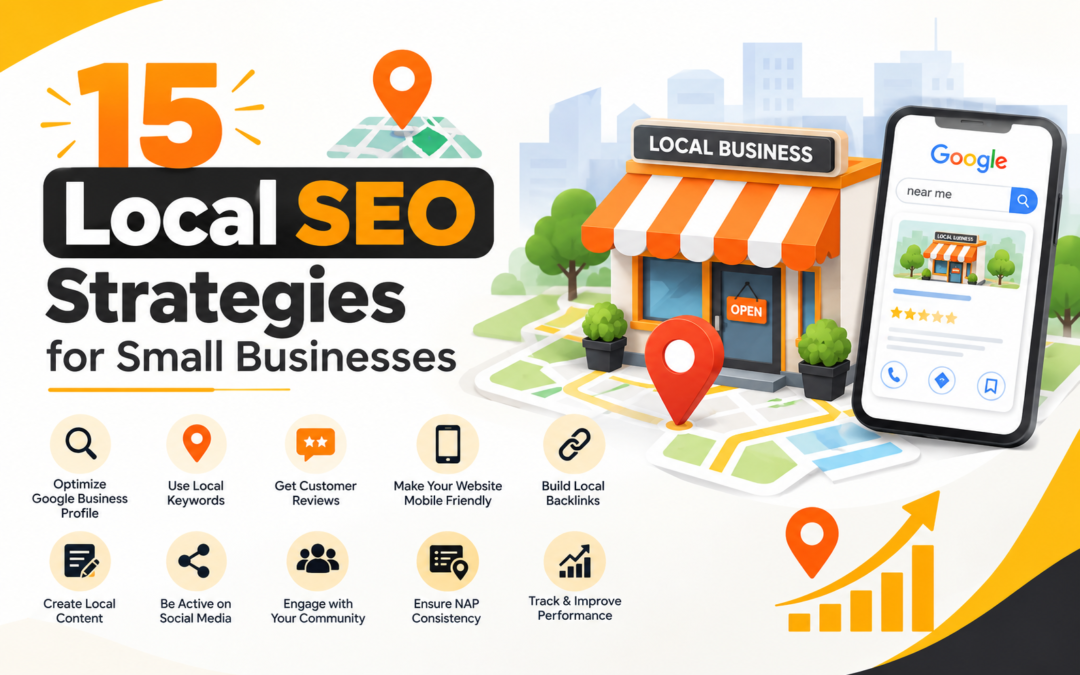
15 Local SEO Strategies for Small Businesses
15 Local SEO Strategies for Small Businesses can help companies improve their visibility in local search results, connect with nearby customers, and generate more business opportunities. In today’s competitive online environment, appearing when potential customers search for products or services in their area is essential. Whether you operate a retail shop, restaurant, consultancy, service agency, or professional business, local search engine optimization can help you reach people who are actively looking for what you offer.
At Marketing Baba, we understand that small businesses need practical and cost-effective marketing strategies to compete with established brands. Local SEO provides an opportunity to strengthen online visibility, attract relevant traffic, and build trust within a specific geographic area. By optimizing your website, managing your Google Business Profile, collecting customer reviews, and creating location-focused content, you can improve your chances of reaching potential customers.
In this guide, we will explore 15 effective strategies that small businesses can implement to improve their local search presence and support long-term growth.
What Is Local SEO and Why Does It Matter?
Local SEO, or local search engine optimization, is the process of improving a business’s online presence so that it can appear more prominently in relevant location-based searches. These searches often include a city, neighborhood, service area, or phrases such as “near me.”
For example, someone searching for a marketing agency in Ahmedabad may prefer businesses that operate in or serve Ahmedabad. Local SEO helps businesses communicate their location, services, contact information, and relevance to search engines.
Implementing 15 Local SEO Strategies for Small Businesses can help companies achieve several benefits:
- Improve visibility in local search results.
- Reach customers searching for nearby products and services.
- Increase relevant website visits and inquiries.
- Build credibility through customer reviews.
- Generate calls, direction requests, and qualified leads.
- Strengthen brand awareness within the local market.
- Support sustainable business growth.
Local SEO does not guarantee immediate rankings, but consistent optimization can improve your chances of attracting relevant customers over time.
1. Optimize Your Google Business Profile
Your Google Business Profile is one of the most important tools for local search visibility. It allows eligible businesses to display essential information on Google Search and Google Maps.
Complete your profile with accurate business information, including your business name, address or service area, phone number, website, operating hours, and primary business category.
Choose the most relevant primary category and add appropriate secondary categories where applicable. Write a clear business description that explains your services and what makes your company valuable to customers.
Upload authentic photographs of your premises, team, products, or completed projects. Keep your information updated whenever business details change.
For businesses serving customers at their locations, such as consultants or repair providers, configure the service area correctly. Avoid listing a residential or virtual address as a storefront when it does not meet Google’s eligibility requirements.
An accurate and complete profile helps customers understand your business and makes it easier for Google to assess its relevance to local searches.
2. Conduct Local Keyword Research
Keyword research helps you understand how potential customers search for your products and services. For local SEO, focus on relevant search terms that include geographic modifiers and service-related phrases.
For example, a business in Ahmedabad might target keywords such as:
- SEO services in Ahmedabad
- Website development company in Ahmedabad
- Digital marketing agency near me
- Affordable graphic design services in Ahmedabad
- Marketing consultancy in Gujarat
Use keyword research tools, Google search suggestions, and relevant search results to identify phrases that match your offerings.
Consider search intent before choosing keywords. Someone searching for “what is SEO” may want information, while someone searching for “SEO company in Ahmedabad” may be comparing service providers.
Create a list of primary and secondary keywords for your important services. Use them naturally in page titles, headings, service descriptions, and website content.
The goal is to attract relevant visitors rather than simply increasing the number of keywords on your website.
3. Create Location-Specific Website Pages
If your business serves multiple cities or areas, location-specific pages can help you communicate where your services are available.
For example, a company offering website development and marketing services may create separate pages for Ahmedabad, Gandhinagar, and other locations it genuinely serves.
Each page should include useful, original information about the services available in that location. Explain relevant customer needs, service coverage, project experience, and ways to contact your business.
Avoid creating dozens of nearly identical pages that differ only by city name. Such pages can provide little value to users and may be considered doorway abuse when designed primarily to manipulate search rankings.
Instead, develop useful landing pages that answer local customers’ questions and clearly explain how your business can help them.
Location pages work best when they reflect genuine service availability and provide a meaningful experience for visitors.
4. Maintain Consistent Business Information
Your business name, address, phone number, and other essential details should remain accurate across your website and important online directories.
This information is often called NAP: Name, Address, and Phone Number.
Review your business listings on relevant directories, industry websites, social media profiles, and local business platforms. Correct outdated phone numbers, inconsistent addresses, spelling mistakes, and old operating hours.
If your business changes its location or contact number, update the most important listings as soon as possible.
Consistency helps customers contact you confidently and reduces confusion about your business details.
Although matching listings alone cannot guarantee higher rankings, accurate information supports trust, discoverability, and a better customer experience.
5. Collect Genuine Customer Reviews
Customer reviews can influence purchasing decisions and contribute to the prominence of eligible businesses in local search results.
Encourage satisfied customers to share honest feedback through your Google Business Profile or other relevant review platforms. You can send a polite follow-up message after completing a project or providing a service.
Make the process simple by sharing a direct review link or QR code.
Respond to both positive and negative reviews professionally. Thank customers for positive feedback and address complaints constructively. If a review raises a genuine issue, explain how you intend to resolve it without disclosing confidential customer information.
Never purchase fake reviews, offer incentives in exchange for positive reviews, or pressure customers to leave only favorable feedback.
A steady approach to collecting authentic reviews can strengthen your reputation and help potential customers make informed decisions.
6. Optimize Website Titles and Meta Descriptions
Page titles and meta descriptions help search engines and users understand what each page offers.
Include relevant local keywords in your title tags when appropriate. For example, a title might read “Affordable SEO Services in Ahmedabad | Marketing Baba.”
Write unique titles for important service pages, location pages, and blog posts. Avoid repeating the same title across multiple pages.
Meta descriptions should summarize the page accurately and give users a reason to visit. You may highlight your services, service location, or a useful benefit.
For example, a local service page could explain that your company provides website development and marketing support to businesses in Ahmedabad.
Google may generate search snippets from page content instead of using your supplied meta description, so focus on creating helpful, relevant content throughout the page.
7. Make Your Website Mobile-Friendly
Many people search for local businesses using smartphones. They may want to call a service provider, find directions, compare prices, or make an inquiry while traveling.
A mobile-friendly website should load efficiently, display content clearly, and offer easy navigation on smaller screens.
Check the following elements:
- Responsive layouts that adapt to different screen sizes.
- Readable text and properly spaced buttons.
- Clickable phone numbers and email addresses.
- Easy-to-use contact forms.
- Optimized images that load efficiently.
- Clear calls to action.
- Simple navigation and accessible menus.
Test your website on different mobile devices and browsers. Review Google’s Core Web Vitals and other performance diagnostics to identify potential improvements.
A good mobile experience can reduce friction for visitors and make it easier for interested customers to contact your business.
8. Publish Helpful Local Content
Local content allows businesses to answer questions that matter to customers in their communities.
Instead of publishing only promotional material, create articles, guides, case studies, and frequently asked questions that address local needs.
A marketing agency in Ahmedabad, for example, could publish content about local business marketing, regional customer behavior, website development requirements, and advertising opportunities.
Other useful content ideas include:
- Guides to choosing a local service provider.
- Answers to frequently asked customer questions.
- Case studies featuring genuine local projects.
- Practical advice for businesses in your industry.
- Updates about relevant community activities.
- Explanations of common customer problems.
Use local references when they add genuine value. Avoid inserting city names repeatedly without useful context.
Publishing original and relevant content helps demonstrate your expertise and gives visitors more reasons to explore your website.
9. Build Relevant Local Backlinks
Backlinks are links from other websites that point to your website. Relevant, trustworthy links can support your site’s authority and discoverability.
Small businesses can build local relationships that naturally lead to useful backlinks.
Consider collaborating with local business associations, industry organizations, community groups, suppliers, educational institutions, and event organizers.
You might contribute expert commentary to a local publication, sponsor a relevant community event, or participate in a business networking initiative.
For example, a company exhibiting at a regional trade show might receive a link from the event organizer’s website.
Focus on relationships and genuine value instead of buying large numbers of links or participating in link schemes.
A smaller number of relevant editorial links can be more valuable than a large collection of unrelated links.
10. Add Local Business Structured Data
Structured data is code that helps search engines interpret information about a website and the business it represents.
Where appropriate, implement relevant LocalBusiness structured data using Schema.org properties. These may include your business name, address, telephone number, URL, opening hours, and other supported information.
Ensure that structured data accurately reflects information visible to users on your website. Use the appropriate business subtype when one is available.
Validate your implementation using Google’s Rich Results Test where applicable and a schema markup validator for broader checks.
Structured data does not guarantee enhanced search results or improved rankings. Its purpose is to help search engines understand the information presented on your website.
If you use WordPress, suitable SEO plugins or developer support can help you implement and maintain structured data correctly.
11. Improve Your Website’s Internal Linking
Internal links connect one page of your website to another. They help visitors discover related information and help search engines understand your site’s structure.
For example, a blog post about local marketing could link to your SEO services page, while a website development article could direct readers to your relevant service offering.
Use descriptive anchor text that explains what the linked page contains. Place links where they are useful to readers rather than adding them unnecessarily.
Create a logical hierarchy for your website, with important service pages accessible through navigation menus and relevant supporting content.
Review older blog posts periodically and add internal links to newer, useful resources when appropriate.
A strong internal linking structure can improve navigation, distribute link equity across relevant pages, and help customers move from informational content toward suitable services.
12. Optimize Images for Local Search and Performance
Images improve the user experience, explain services, and make website pages more engaging. They can also contribute to image search visibility when optimized appropriately.
Use descriptive file names that explain the image’s content. For example, an image showing a completed local business project could have a meaningful name rather than a generic camera-generated file name.
Write useful alt text for informative images so that people using assistive technology can understand their purpose. Avoid stuffing location keywords into every image description.
Compress images to reduce file sizes while maintaining suitable visual quality. Use modern image formats where appropriate and implement responsive images for different screen sizes.
Authentic photographs of your business, team, projects, and products may help potential customers understand your services.
Only include location references when they accurately describe the image or its context. Image optimization should support accessibility, performance, and relevance rather than serve as a way to repeat keywords.
13. Use Social Media to Support Local Visibility
Social media platforms help small businesses maintain relationships with local audiences and distribute useful content.
Choose platforms that suit your audience and business objectives. Share project updates, educational posts, customer stories, product information, and relevant community news.
Include accurate contact information and links to your website in your profiles. When appropriate, identify your service area and use location tags or relevant local hashtags.
Respond to questions and comments promptly, and participate in genuine conversations with customers and local organizations.
For example, Marketing Baba can share practical marketing advice, local business success stories, and educational content that helps business owners understand online and offline marketing.
Social engagement is not a direct substitute for SEO, and social media activity does not guarantee better local rankings. However, it can increase brand awareness, generate referral visits, and encourage people to search for your business by name.
14. Track Local SEO Performance Regularly
Local SEO requires ongoing monitoring. Tracking the right metrics helps you understand which activities are working and where improvements are needed.
Use Google Search Console to review search impressions, clicks, average positions, and the queries bringing visitors to your website.
Google Analytics can help you understand website traffic, engagement, and conversions when configured appropriately.
Your Google Business Profile performance data may provide insights into interactions such as calls, website clicks, and direction requests, depending on the features and reporting available.
Monitor key indicators such as:
- Organic traffic from relevant locations.
- Search impressions and clicks for local keywords.
- Qualified inquiries and phone calls.
- Website conversion rates.
- Customer review trends.
- Performance of location-specific landing pages.
- Changes in visibility for important search terms.
Review performance monthly and compare results over meaningful periods. Do not judge your strategy solely by one keyword’s ranking because local results can vary by location, device, and search context.
Use the findings to refine your content, improve landing pages, and prioritize the activities most closely connected to business outcomes.
15. Keep Your Local SEO Strategy Updated
Search behavior, customer expectations, competitors, and search engine systems continue to evolve. A successful local SEO strategy should therefore be reviewed and improved regularly.
Check that your Google Business Profile information remains accurate. Update outdated service pages, refresh useful blog posts, repair broken links, and review website performance.
Study competitor websites to identify content gaps and customer questions that your business has not addressed. Focus on providing more useful information rather than copying competitor content.
Expand your content when you introduce new services or begin serving additional locations. Make sure any claims about your coverage are accurate.
Continue collecting genuine reviews and responding professionally to customer feedback. Review your keyword strategy as your services, market, and customer needs change.
These ongoing activities help maintain a useful online presence and make it easier to adapt your marketing efforts as your business grows.
Common Local SEO Mistakes Small Businesses Should Avoid
Even when businesses invest time in optimization, a few common mistakes can limit results.
Keyword stuffing: Repeating a location or keyword excessively makes content difficult to read. Use relevant phrases naturally.
Fake reviews: Purchased or fabricated reviews can violate platform policies and damage customer trust.
Duplicate location pages: Pages with nearly identical content for different cities may offer little value to visitors.
Incorrect business information: Outdated contact details and operating hours can lead to missed inquiries and frustrated customers.
Ignoring mobile users: A difficult mobile experience can prevent potential customers from completing important actions.
Neglecting performance tracking: Without measurement, it becomes difficult to identify which improvements are producing results.
Expecting instant rankings: Local SEO takes time, and results depend on competition, relevance, prominence, website quality, and other factors.
Avoiding these mistakes helps create a more reliable foundation for long-term local search performance.
How Marketing Baba Can Help Small Businesses
Marketing Baba provides integrated marketing solutions designed to help businesses strengthen their online and offline presence. Our services include search engine optimization, Google Ads, social media marketing, lead generation, content marketing, website development, graphic design, branding, and other marketing activities.
We understand that each business has different goals, budgets, audiences, and geographic requirements. A local retailer may need stronger map visibility, while a professional service provider may prioritize qualified leads and location-specific landing pages.
Our approach combines research, strategy, implementation, and performance evaluation to help businesses identify suitable marketing opportunities.
By integrating local SEO with relevant marketing channels, businesses can build a more consistent brand presence, improve customer discovery, and create opportunities for sustainable growth.
To learn more about our services, visit https://marketingbaba.co.in/ and explore how Marketing Baba can support your marketing objectives.
Conclusion
15 Local SEO Strategies for Small Businesses provide a practical starting point for improving local visibility, building credibility, and attracting relevant customers. From optimizing your Google Business Profile and researching local keywords to earning relevant backlinks and monitoring performance, each strategy contributes to a stronger online presence.
Small businesses do not need to implement every improvement at once. Start with accurate business information, a complete Google Business Profile, useful website content, and a mobile-friendly website. Gradually expand your efforts based on customer needs and measurable results.
Consistency is essential. Review your progress, improve underperforming pages, respond to customer feedback, and keep your information updated.
With a well-planned strategy and a focus on providing genuine value, local SEO can become an important part of your business’s long-term marketing efforts.
Ready to improve your local search visibility? Connect with Marketing Baba to explore practical marketing solutions for your business.
Start reviewing your Google Business Profile today, identify opportunities for improvement, and make optimization an ongoing part of your marketing strategy.
-
Digital Marketing in 2026: What’s Working, What’s Dead, and What’s Next: Read More
-
Best Marketing Consulting Services for Businesses: Read More
-
9 Ultimate Lead Generation Secrets Revealed: Read More
-
8 Fresh Content Ideas to Engage Your Audience: Read More
-
Best Marketing Consulting Services for Businesses: Read More